Pore-Clogging Risk in Skincare Layering | Ingredient Interaction Guide
Still battling breakouts despite using "non-comedogenic" products? You're not alone. It is a common and frustrating experience. You buy the best products, check the labels, and follow every step, yet those stubborn clogs and pimples remain. Why is your skin still breaking out? The culprit might not be any single product in your cabinet, but rather how your ingredients interact when you layer them together.
Many people assume that if Product A is safe and Product B is safe, then using them together must also be safe. Unfortunately, skincare chemistry is more complex than that. When you stack multiple products, the ingredients mix on your skin's surface. This creates new textures and chemical environments that can trap oils and debris. In this guide, we will unveil the hidden risks of ingredient layering and show you how to build a truly pore-safe routine.
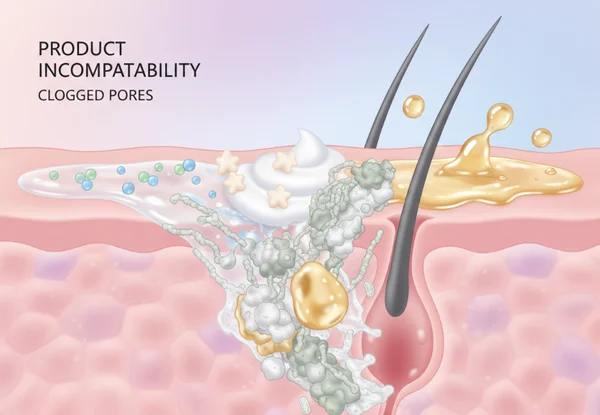
To get started on your journey to clear skin, you can check ingredients from your current products using our specialized database. Understanding what is in your bottles is the first step toward preventing congestion.
Understanding Pore-Clogging Ingredient Interactions
Master your routine by decoding ingredient conflicts. Your skin is a living organ, not a flat surface. When we talk about skincare ingredient interactions, we are looking at how different chemicals behave when they meet. Sometimes, two ingredients that are perfectly fine on their own can become problematic when mixed.
The Science Behind Ingredient Synergy
Synergy happens when two or more substances work together to produce an effect greater than the sum of their individual parts. In skincare, synergy can be positive. For instance, Vitamin C and Vitamin E boost each other's antioxidant power. However, synergy can also be negative.
When you layer multiple products, the solvents and emulsifiers in one product can change the solubility of ingredients in another. A "safe" fatty acid might become more likely to penetrate and clog a pore if it is dissolved in a specific type of alcohol or solvent from a different layer. This chemical teamwork can turn a gentle routine into a recipe for congestion.
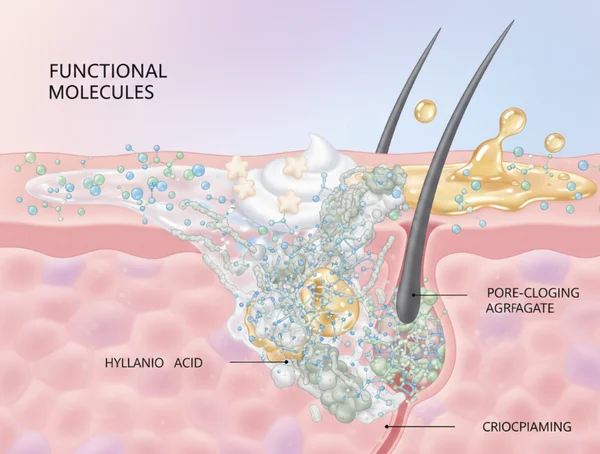
When "Safe" Ingredients Create "Unsafe" Combinations
The term non-comedogenic is often used as a marketing label, but it is not a strictly regulated medical term. An ingredient might have a low comedogenic rating in a lab test, but its behavior changes depending on what it is mixed with. If you use a lightweight lotion and then top it with a heavy face oil, the oil can act as an occlusive "seal."
This seal can trap the ingredients from the lotion deeper in the pore than they were intended to go. This "trapping effect" is a major reason why people experience breakouts even when using high-quality products. To ensure your combination is actually safe, you should analyze your routine to see if your product stack contains hidden culprits.
Molecular Weight and Absorption Conflicts
Molecular weight refers to how "large" or "heavy" an ingredient is at a microscopic level. Generally, you want smaller molecules to go on the skin first so they can absorb. Larger molecules should stay on top. If you apply a large-molecule product like a heavy silicone and then try to apply a watery serum, the smaller molecules cannot get through.
Heavy oils block water-based serums from absorbing. Instead, serums pool on the skin's surface, mixing with oil to form pore-clogging sludge. This creates a thick, sticky film on the skin. This film is a magnet for dead skin cells and environmental pollutants. When these mix with your natural sebum, they form a "plug" in the pore, leading to blackheads and whiteheads.
Common Skincare Layering Mistakes That Clog Pores
Even with the best intentions, many skincare enthusiasts make layering mistakes that lead to "product-induced acne." Identifying these specific conflicts can help you clear up your complexion quickly.
The Silicones-SPF Conflict
Silicones are popular because they make skin feel silky and smooth. They are found in many primers and moisturizers. However, many sunscreens (SPF) also contain high amounts of silicones or film-forming agents to make the product water-resistant.
When you layer a silicone-heavy primer over a silicone-heavy moisturizer, and then add SPF, you are essentially "shrink-wrapping" your skin. This prevents your skin from "breathing" and prevents natural sebum from escaping the pore. If you notice your products "pilling" or rolling off in little balls, this is a sign that the layers are not bonding correctly and are likely clogging your pores.
Oil-Water Emulsion Breakdown
Chemistry 101 tells us that oil and water don't mix without help. Skincare products use emulsifiers to keep these elements blended. Layering water-based serums, oils, and creams mixes emulsifiers from different products. When these emulsifiers clash, they separate into pore-clogging oil patches.
These patches are much more likely to be comedogenic than a well-blended formula. Instead of a smooth, absorbing layer, the oils sit in concentrated areas. This breakdown disrupts the product's intent and puts your skin at risk for congestion.
pH Disruptors in Layered Routines
The skin has a natural pH, usually slightly acidic, around 4.7 to 5.7. Many active ingredients, like AHAs, BHAs, or Vitamin C, require a specific pH to work. Applying acidic serums before alkaline moisturizers cancels their effects. Worse, this pH clash irritates skin, triggering excess oil and clogged pores.
Irritated skin often responds by producing more oil and shedding skin cells faster. This combination of excess oil and extra dead skin is the primary cause of clogged pores. Keeping your routine's pH balanced is essential for long-term skin health. Avoid mixing highly acidic actives with basic creams unless you allow significant time between steps.
How to Layer Non-Comedogenic Products Safely: A Step-by-Step Guide
Creating a pore-safe routine does not mean you have to stop using multiple products. It simply means you need to be strategic about how you combine them. By following a few simple rules, you can significantly reduce the risk of breakouts.
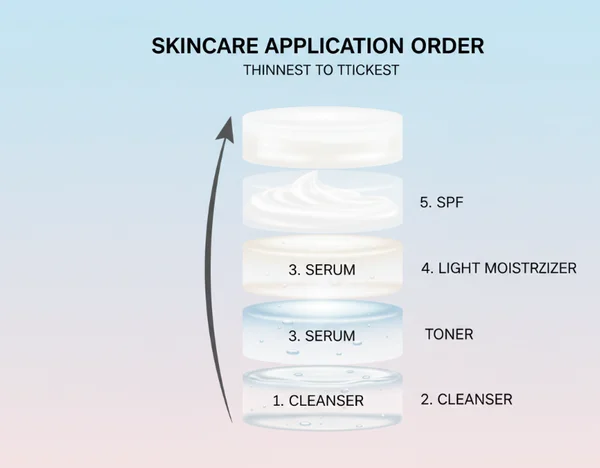
The Golden Rules of Ingredient Layering
The most important rule is: Less is often more. If you are struggling with breakouts, try to simplify your routine to three or four essential steps. This reduces the number of chemical interactions happening on your face.
Another golden rule is to give each layer time to dry. Instead of rushing, wait 30 to 60 seconds between each product. This allows the solvents to evaporate and the active ingredients to begin absorbing before the next layer is applied. This prevents the "mixing" of ingredients on the surface that often leads to pore-clogging films. To help you decide which products to keep, use a pore clogging checker to screen every item in your cabinet.
Creating a Pore-Safe Routine: Step-by-Step Guide
- Cleanse Thoroughly: Start with a clean slate. Use a gentle, water-soluble cleanser to remove all traces of oil and dirt.
- Water-Based Treatments First: Apply your thinnest products first. This includes toners, essences, and watery serums like Hyaluronic Acid.
- Targeted Actives: Apply your treatments like Salicylic Acid or Vitamin C. These need to be close to the skin to be effective.
- Light Moisturizer: Use a gel or light cream to hydrate. Look for ingredients like glycerin or ceramides.
- Seal and Protect: During the day, finish with a lightweight SPF. At night, use a slightly thicker cream if your skin is dry, but ensure it is verified as pore-safe.
Product Order Matters: From Thinnest to Thickest
If you remember only one thing about layering, make it this: apply products from thinnest consistency to thickest consistency. This ensures that the heavy, occlusive ingredients don't block the lighter, hydrating ingredients.
Think of your skin like a sponge. If you pour thick syrup on a sponge first, water won't be able to soak in later. But if you soak the sponge in water first, it can still absorb some syrup on the surface. Following the thinnest-to-thickest rule ensures your skin gets the hydration it needs without the heavy ingredients causing a "logjam" in your pores.
Take Control of Your Complexion
Stop guessing which product combinations clog your pores. Knowledge transforms routines—and skin. Achieving clear results requires more than just buying products labeled "for acne-prone skin." You must understand how your skincare routine functions as a whole. Even expensive, high-quality products can cause issues if they are layered incorrectly or react poorly with other products.
By paying attention to the science of ingredient synergy and avoiding common layering mistakes like the silicone-SPF conflict, you can transform your complexion. Knowledge is your most powerful tool in the fight against breakouts. Don't leave your skin's health to chance. Before you apply your next layer, start your analysis to ensure your routine is truly safe. Our database helps you uncover hidden culprits so you can finally achieve clear, healthy skin. Try thinning your routine this week: track changes with our clogged pore diary template.
FAQ Section
How do I know if my skincare products are interacting badly?
The most common signs of a bad interaction are "pilling" (small balls of product forming on the skin), a stinging or burning sensation, or sudden breakouts in areas where you usually don't get acne. If your skin feels greasy or "suffocated" shortly after your routine, your layers might be too heavy or conflicting. You can use our free online tool to check if the specific ingredients in those products are known to cause issues.
Can I layer multiple products with silicones in my routine?
While silicones are not inherently "bad," layering too many of them can create an occlusive barrier that traps sweat, oil, and bacteria. If you use a silicone-based serum, moisturizer, and primer, you are significantly increasing your risk of clogged pores. Try to limit silicone-heavy products to just one step in your routine, such as your primer or your SPF.
Does the order of applying skincare products really matter?
Yes, the order is vital. Heavy oils block water-based serums from absorbing. Instead, serums pool on the skin's surface, mixing with oil to form pore-clogging sludge. If you apply a thick oil or cream before a water-based serum, the serum will simply sit on top of the oil. It won't be able to penetrate the skin, and the mixture of the two can create a sticky residue that clogs pores. Always follow the rule of "thinnest to thickest" for the best results.
How often should I audit my skincare routine for potential interactions?
It is a good idea to audit your routine every time you add a new product or when the seasons change. Your skin's needs in the humid summer are different from the dry winter. An audit helps you ensure that your "stack" is still working for you and not against you.
Is it possible for products labeled "non-comedogenic" to still cause breakouts when layered?
Absolutely. "Non-comedogenic" is a helpful guide, but it doesn't account for how products interact on your unique skin. Factors like your skin's natural oil production, the order of application, and the cumulative effect of multiple layers can still lead to clogged pores even with "safe" products.
Disclaimer: This article is for informational purposes only and does not constitute professional medical advice. Always consult with a dermatologist for personalized skin concerns.