Acne-Safe Exfoliators: Spot Pore-Clogging Ingredients
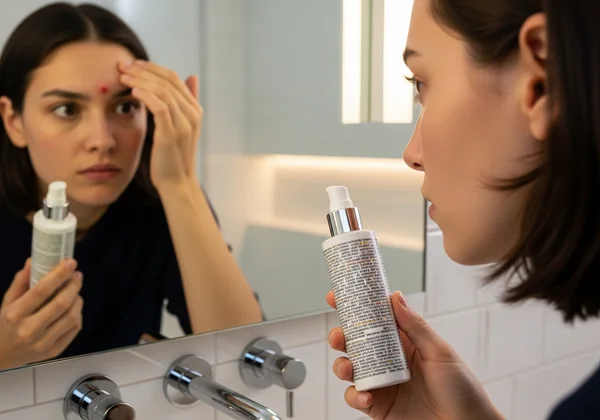
Are your exfoliators secretly making your acne worse? It’s a frustrating cycle many of us know well. You invest in products designed to give you clear, smooth skin, only to find new breakouts appearing. The problem often isn't the act of exfoliating itself, but the hidden ingredients lurking within the formula.
Many popular scrubs and chemical peels contain substances that can clog pores, leading to the very acne you’re trying to prevent. This guide is here to change that. We'll show you the difference between exfoliant types, expose common pore-clogging culprits, and help you build a truly acne-safe routine.
Once you know what's inside, you're in the driver's seat for clearer skin. It all starts with knowing what’s in your bottle. A simple check using our free online tool can unveil the hidden culprits in your skincare routine, empowering you to make choices that lead to clearer skin.
Understanding Exfoliants: Chemical vs. Physical
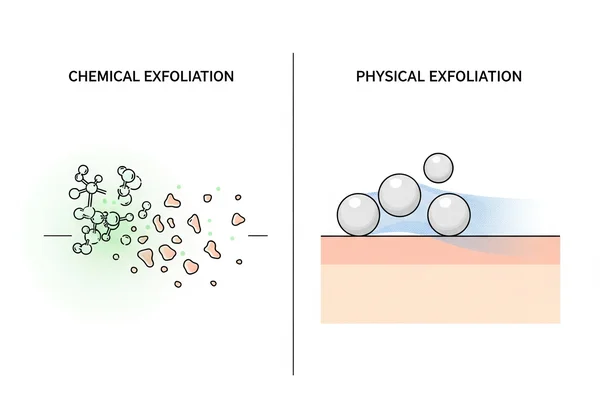
Before we dive into specific ingredients, it’s essential to understand the two main categories of exfoliants. Both aim to remove dead skin cells from the surface, but they work in very different ways. Choosing the right type for your acne-prone skin is the first step toward a successful routine.
Chemical Exfoliants: AHAs, BHAs & Their Role in Acne
Chemical exfoliants use acids to dissolve the bonds holding dead skin cells together, allowing them to shed naturally. They work deep within the pores and are often recommended for acne-prone skin. The two most common types are:
- Alpha Hydroxy Acids (AHAs): These are water-soluble acids, like Glycolic Acid and Lactic Acid. They work on the skin's surface to improve texture, fade dark spots, and smooth fine lines. While effective, some AHA formulations can be irritating if not chosen carefully.
- Beta Hydroxy Acids (BHAs): The most famous BHA is Salicylic Acid. It is oil-soluble, which means it can penetrate deep into your pores to dissolve oil and dead skin cell buildup. This makes it a superstar ingredient for treating blackheads, whiteheads, and inflamed pimples.
For acne sufferers, BHAs are typically the go-to choice. However, the effectiveness of any chemical exfoliant can be completely undone if the product's base formula contains pore-clogging ingredients.
Physical Scrubs: Are They Really Bad for Acne-Prone Skin?
Physical exfoliants, or scrubs, use small particles like sugar, salt, or jojoba beads to manually buff away dead skin cells. They have a bad reputation in the acne community, often criticized for being too harsh and causing micro-tears in the skin. This irritation can trigger inflammation and worsen breakouts.
Not all scrubs are equal. Skip large, jagged particles like crushed nutshells—they're too harsh for acne-prone skin. Opt for small, smooth beads instead. But watch the base: creamy, oily formulas often hide pore-cloggers.
The Comedogenic Threat: Identifying Pore-Clogging Exfoliant Ingredients
The term "comedogenic" refers to an ingredient's tendency to clog pores, leading to comedones—the technical term for blackheads and whiteheads. An ingredient that is highly comedogenic can trigger breakouts even in a product designed to fight acne. This is where many people go wrong, trusting the product's marketing claims without checking the full ingredient list.
Common Pore-Clogging Culprits Hiding in Exfoliants
You might be surprised to learn which ingredients can cause trouble. They often hide in plain sight, used to create a rich, moisturizing texture in exfoliants. Here are a few common offenders to watch out for:
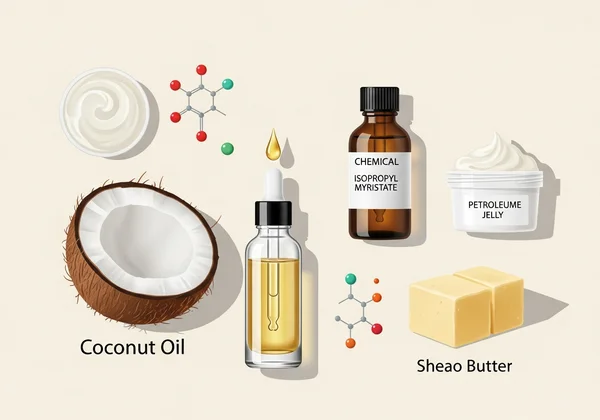
- Coconut Oil: While popular in natural skincare, it is highly comedogenic for many people and a frequent ingredient in DIY or "clean beauty" scrubs.
- Isopropyl Myristate & Isopropyl Palmitate: These are emollients used to make products feel smooth and less greasy. Unfortunately, they are well-known for their potential to clog pores.
- Lauric Acid: A fatty acid found in high concentrations in coconut oil, it is a major trigger for breakouts in susceptible individuals.
- Algae Extract: Though it sounds natural and beneficial, certain types of algae extract are surprisingly potent pore-cloggers.
- Shea Butter: While a wonderful moisturizer for dry skin on the body, it can be too heavy for the face and may clog pores for those prone to acne.
Remembering this list is difficult, and new ingredients appear all the time. That’s why a reliable checker is your best ally in the fight for clear skin.
Decoding "Non-Comedogenic": Marketing Hype or Reliable Label?
You’ve likely seen the term "non-comedogenic" on countless product labels. It’s meant to signal that a product won’t clog your pores. The problem? This term is not regulated by the FDA or any other governing body. A brand can use this claim based on its own internal testing or simply because the formula doesn't contain the most well-known offenders.
A 'non-comedogenic' label doesn't guarantee safety for your skin. Everyone's pores react differently. Instead of blindly trusting a label, the most empowering approach is to analyze the entire ingredient list yourself. This is where an unbiased acne ingredient checker becomes an indispensable tool.
Your Guide to Our Pore Clogging Checker for Exfoliants
Feeling overwhelmed? Don't be. We created our pore clogging ingredient checker to make this process simple, fast, and completely free. Our goal is to give you the clarity and confidence to choose products that truly work for your skin. You don't need to be a cosmetic chemist—you just need to copy and paste.
Step-by-Step: How to Analyze Your Exfoliants
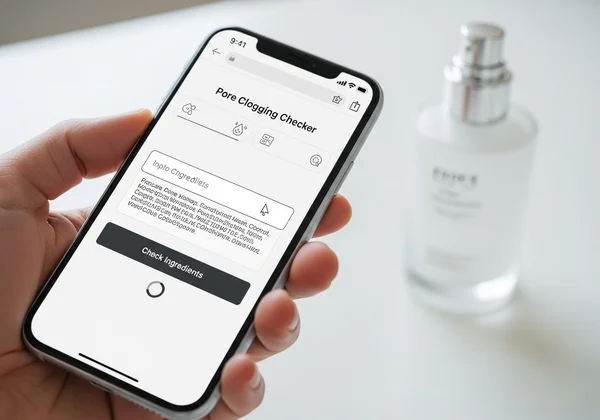
Checking your product takes less than a minute. Here’s how to do it:
- Find the Ingredients: Locate the full ingredient list on your exfoliant’s bottle, box, or on the retailer's website.
- Copy the List: Select and copy the entire list of ingredients. Make sure it's comma-separated.
- Visit Our Tool: Go to the PoreCloggingChecker.org homepage.
- Paste and Analyze: Paste the list into the input box and click the "Check" button.
That's it! Our system instantly cross-references your list with our comprehensive, science-backed database of comedogenic ingredients.
What Your Results Mean: Identifying Red Flag Ingredients
Within seconds, you’ll see your results. Our tool highlights any potential pore-clogging ingredients, typically in a bold color like red. This immediately draws your attention to the exact substances that could be causing trouble.
A red flag doesn't doom every product. But if acne hits while using it? That's your clue. This knowledge allows you to make an informed decision about whether to continue using it or to look for a safer alternative.
Building an Acne-Safe Exfoliation Routine
Once you've identified which ingredients to avoid, the next step is to find products with ingredients that actively help your skin. A great exfoliation routine is not about avoiding the bad, but also about choosing the good.
Top Non-Comedogenic Exfoliant Ingredients to Seek
When shopping for your next exfoliant, keep an eye out for these proven, acne-safe ingredients. They are effective at clearing pores without the high risk of causing new ones:
- Salicylic Acid (BHA): The gold standard for acne-prone skin. It exfoliates inside the pore lining.
- Mandelic Acid (AHA): A gentler AHA with larger molecules, making it less likely to cause irritation. It also has antibacterial properties.
- Lactic Acid (AHA): Another gentle AHA that exfoliates the surface while also helping to hydrate the skin.
- Jojoba Beads: If you prefer a physical scrub, look for one with these small, smooth, and biodegradable beads that won't tear your skin.
- Enzymes: Fruit enzymes like Papain (from papaya) or Bromelain (from pineapple) offer a very mild form of exfoliation suitable for sensitive skin.
Expert Tips for Integrating Exfoliation into Acne-Prone Skin Routines
How you use your exfoliant is just as important as what’s inside it. To get the best results without causing irritation, follow these simple tips:
- Start Slow: Begin by exfoliating just 1-2 times per week to see how your skin reacts. You can gradually increase the frequency if your skin tolerates it well.
- Patch Test: Before applying a new product to your entire face, test it on a small, discreet area (like behind your ear) for a few days to check for reactions.
- Be Gentle: Never scrub your face harshly. Use light, circular motions and let the ingredients do the work.
- Follow Up Properly: After exfoliating, always apply a lightweight, non-comedogenic moisturizer to soothe and hydrate your skin. During the day, sunscreen is non-negotiable, as exfoliation can make your skin more sensitive to the sun.
Take Control of Your Exfoliation Journey for Clearer Skin
Navigating exfoliants for acne-prone skin can feel like walking through a minefield. Marketing claims are often misleading, and even products designed for acne can hide pore-clogging ingredients.
Bottom line: Pick exfoliants by their type and their full ingredient list. Stop trusting 'non-comedogenic' labels alone. The only way to be sure is to check the ingredients before you buy.
You no longer have to guess which products are safe. With a quick analysis, you can finally build an exfoliation routine that leads to clear, healthy skin.
Ready to uncover the truth about your products? Head over to our pore clogging checker and analyze your exfoliant's ingredient list in seconds.
Frequently Asked Questions About Acne-Safe Exfoliators
How can I check if my current exfoliant is pore-clogging?
The easiest and most reliable way is to use an online tool. Simply copy the full ingredient list from your product and paste it into our pore clogging checker. Our database will instantly highlight any ingredients known to be comedogenic.
Are all AHAs and BHAs safe for acne-prone skin?
While the acids themselves (like Salicylic Acid or Glycolic Acid) are generally beneficial for acne, the overall product formula is what counts. A serum or lotion containing these acids can also include thickeners, emollients, or oils that may clog pores. Always check the full ingredient list.
What are the most common pore-clogging ingredients in physical scrubs?
In physical scrubs, the most common culprits are often found in the base formula that suspends the exfoliating particles. Look out for ingredients like Coconut Oil, Shea Butter, Isopropyl Myristate, and certain fatty acids that give the scrub a rich, creamy texture but may cause breakouts.
Can using the Pore Clogging Checker replace a dermatologist's advice?
No, it cannot. Our tool is a powerful informational resource to help you make better skincare choices, but it is not a substitute for professional medical advice. If you have persistent or severe acne, you should always consult a board-certified dermatologist for a proper diagnosis and treatment plan.
How often should I use an acne-safe exfoliant?
This depends on your skin type and the strength of the product. A general guideline is to start with 1-3 times per week. Pay close attention to how your skin responds. If you notice any signs of irritation, such as redness or excessive dryness, reduce the frequency. The goal is to get the benefits of exfoliation without damaging your skin barrier.