Como os Ingredientes Obstruem os Poros: Usando um Verificador de Obstrução de Poros para Entender a Comedogênese
Já sentiu a frustração de uma nova erupção cutânea depois de experimentar um produto de cuidado com a pele "milagroso"? Você segue uma rotina diligente, limpa, hidrata e protege, mas novas imperfeições surgem. Frequentemente, o culpado está bem à vista: na lista de ingredientes. Mas como os ingredientes obstruem os poros, e qual é a ciência por trás desse processo frustrante?
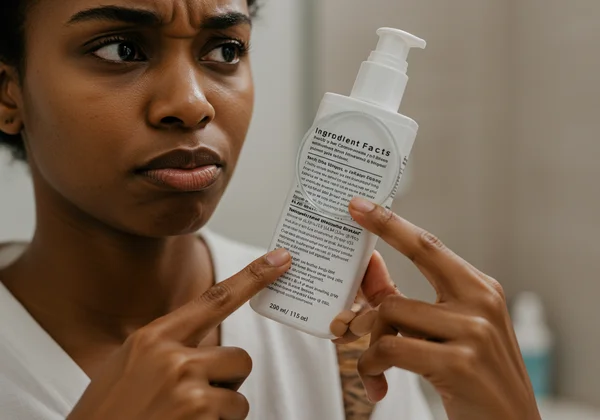
Compreender essa ciência, conhecida como comedogênese, é a chave para uma pele mais clara. Este artigo irá desmistificar como ingredientes aparentemente inofensivos podem causar obstrução de poros e o surgimento de erupções cutâneas. Ao compreender esses conceitos centrais, você estará capacitado para fazer escolhas mais inteligentes para a sua pele. O primeiro passo é o conhecimento, e o próximo é aplicá-lo com um eficaz verificador de ingredientes comedogênicos.
Desvendando a Comedogênese: O Que Exatamente é um Poro Obstruído?
Antes de podermos identificar ingredientes problemáticos, devemos primeiro entender o ambiente onde o problema começa: o próprio poro. Um poro obstruído, ou um comedão (comedo), não é apenas um bloqueio aleatório; é o resultado de uma reação em cadeia biológica específica.
A Anatomia do Poro: Mais do Que Apenas um Buraco
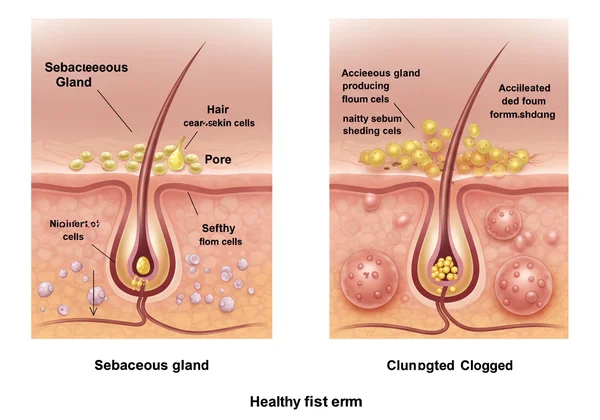
Aquilo que chamamos de "poro" é, na verdade, a abertura de um folículo pilossebáceo. Cada folículo é um pequeno túnel que contém um pelo e uma glândula sebácea, que produz o óleo natural da sua pele, o sebo. Em um estado saudável, o sebo viaja pelo folículo e sai pelo poro, hidratando e protegendo a superfície da sua pele. Este sistema delicado funciona perfeitamente até que algo perturbe o equilíbrio, levando a um engarrafamento dentro do poro.
Hiperqueratinização: A Raiz do Bloqueio
O principal gatilho para um poro obstruído é um processo chamado hiperqueratinização. Normalmente, as células da pele que revestem o folículo (queratinócitos) se desprendem individualmente e são empurradas para fora do poro pelo fluxo de sebo. A hiperqueratinização é um processo de descamamento anormal das células da pele onde essas células se multiplicam muito rapidamente e se tornam pegajosas. Em vez de se desprenderem de forma limpa, elas se agrupam, formando um tampão microscópico conhecido como microcomedão – a primeiríssima fase de cada espinha.
O Papel do Sebo: Alimentando o Fogo
Enquanto a hiperqueratinização forma o tampão inicial, o sebo atua como combustível. Quando suas glândulas sebáceas estão hiperativas, a produção excessiva de sebo, associada à acne, se mistura com as células da pele pegajosas e aglomeradas. Essa mistura de células mortas e sebo espesso endurece, criando um tampão sólido que bloqueia completamente o poro. Essa obstrução pode se manifestar como um cravo (aberto ao ar, causando oxidação) ou uma espinha interna (fechada sob a pele). Agora, o cenário está montado para a inflamação e a chegada das bactérias da acne.
Como os Ingredientes Promovem Ativamente a Obstrução dos Poros
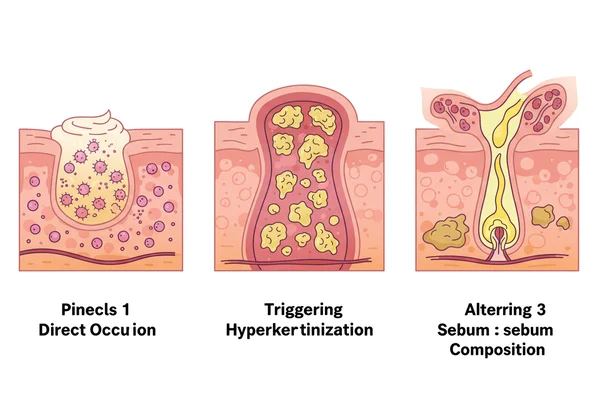
Agora que entendemos o processo natural de obstrução dos poros, vamos explorar como os ingredientes cosméticos podem iniciar ou piorar ativamente esse ciclo. Eles geralmente atuam por meio de alguns mecanismos-chave, transformando seus produtos de cuidados com a pele ou maquiagem de úteis em prejudiciais.
Oclusão Direta: Barreiras Físicas
A maneira mais direta de um ingrediente causar obstruções é sendo oclusivo. Esses ingredientes formam uma barreira física ou um filme na superfície da pele. Embora alguma oclusão possa ser benéfica para reter a umidade (especialmente para pele seca), certos ingredientes oclusivos pesados para a pele também podem prender suor, bactérias, células mortas da pele e sebo dentro do poro. Isso impede o processo natural de descamação e cria o ambiente anaeróbico perfeito para a formação de uma erupção cutânea. Um verificador de ingredientes para acne pode ajudar você a identificar esses potenciais bloqueadores.
Desencadeadores da Hiperqueratinização: Agentes Disruptores Celulares
Alguns ingredientes não bloqueiam fisicamente o poro, mas irritam o revestimento folicular. Essa irritação pode ser um gatilho significativo para a hiperqueratinização. Quando as células que revestem o poro ficam inflamadas, seu processo de descamação enlouquece, levando ao acúmulo pegajoso que discutimos anteriormente. Essa acne por irritação folicular é o motivo pelo qual até mesmo alguns produtos "leves" podem causar erupções cutâneas se contiverem um ingrediente que sua pele considera irritante.
Alteração da Composição do Sebo: O Fator Qualidade
Não é apenas a quantidade de sebo que importa, mas também sua qualidade. Pesquisas sugerem que certos ingredientes podem alterar a composição química do sebo, tornando-o mais espesso, pegajoso e propenso à obstrução. Esse processo pode envolver a acne associada à oxidação do sebo, onde o óleo se torna danificado e inflamatório. Quando seus óleos naturais mudam para pior, eles são mais propensos a contribuir para a formação de comedões teimosos.
O Papel das Bactérias: De Obstrução a Lesão Inflamatória
Uma vez que um poro está obstruído com uma mistura de células mortas e sebo, ele se torna um ambiente com privação de oxigênio. Este é o ambiente ideal para a proliferação da Cutibacterium acnes (C. acnes), a bactéria frequentemente associada à acne. As bactérias C. acnes nos poros obstruídos se alimentam do sebo, multiplicam-se rapidamente e produzem subprodutos que desencadeiam uma resposta inflamatória significativa do seu sistema imunológico. Essa inflamação é o que transforma um poro obstruído simples em uma espinha vermelha, inchada e dolorosa.
A Nuance das "Escalas de Comedogenicidade" e a Sua Pele Única
Se evitar erupções cutâneas fosse tão simples quanto verificar uma lista de "ingredientes ruins". A realidade é mais complexa. Compreender as nuances da comedogenicidade é crucial para usar qualquer ferramenta de verificação de ingredientes de forma eficaz.
Compreendendo as Escalas de Comedogenicidade: Estudos de Laboratório vs. Pele Real
Você pode ter ouvido falar de escalas de comedogenicidade, geralmente em uma escala de 0 a 5. É importante saber que essas classificações foram historicamente determinadas usando modelos animais, mais notoriamente o teste da orelha de coelho. A acurácia dos testes de comedogenicidade na pele humana pode ser diferente, pois a orelha de um coelho é muito mais sensível e não é um modelo perfeito para o rosto humano. Embora essas classificações forneçam um ponto de partida útil, elas não são leis absolutas.
Por Que Sua Pele Reage de Forma Individual: Genética e Sensibilidade
Por que sua melhor amiga pode usar óleo de coco como hidratante sem problemas, enquanto ele causa acne cística para você? A resposta está na sua biologia única. Fatores como genética, flutuações hormonais e sua predisposição individual à acne devido à sensibilidade da pele desempenham um papel enorme. A produção natural de óleo da sua pele e a taxa de renovação celular são únicas para você, o que significa que sua reação a um ingrediente também será única. É por isso que testes de contato pessoais e observação cuidadosa são tão importantes.
Além dos Ingredientes: A Formulação Importa
O potencial de um ingrediente para obstruir os poros é fortemente influenciado pela sua concentração e pela formulação geral do produto. Um ingrediente que é altamente comedogênico em uma concentração de 100% pode ser perfeitamente aceitável a 2%. O impacto da formulação cosmética é imenso; outros ingredientes na fórmula podem amortecer ou realçar o efeito de um potencialmente problemático. É por isso que um único ingrediente não é a história completa, mas analisar a lista completa com um verificador de ingredientes de cuidados com a pele oferece a melhor visão geral possível.
Capacitando as Suas Escolhas de Cuidados com a Pele com Conhecimento Científico
A jornada de um poro saudável a uma espinha inflamada é um processo científico complexo, influenciado pela biologia da sua pele e pelos produtos que você usa. Ao compreender os papéis da hiperqueratinização, do sebo e dos comportamentos específicos dos ingredientes, você passa de um consumidor frustrado a um defensor capacitado da sua própria pele. Esse conhecimento transforma uma lista de ingredientes confusa em um roteiro que você pode navegar com confiança.
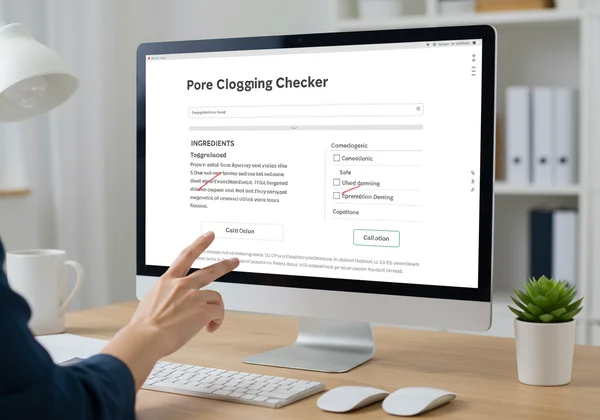
Pronto para colocar este conhecimento científico em prática e realmente entender o que há nos seus produtos de cuidados com a pele? Não deixe a clareza da sua pele ao acaso. Acesse nosso verificador de obstrução de poros gratuito agora para analisar sem esforço os seus produtos e identificar potenciais culpados que obstruem os poros!
Aviso: Este artigo é apenas para fins informativos e não constitui aconselhamento médico. As informações contidas neste documento não se destinam a substituir o aconselhamento médico profissional, diagnóstico ou tratamento. Procure sempre o aconselhamento do seu médico ou outro profissional de saúde qualificado com quaisquer perguntas que possa ter sobre uma condição médica.
Perguntas Frequentes Sobre Obstrução dos Poros e Ingredientes para Acne
Como posso verificar se um produto obstrui os poros antes de comprá-lo?
A maneira mais eficaz é analisar a sua lista completa de ingredientes. Você pode copiar a lista do site do produto e colá-la numa ferramenta online confiável. O verificador de obstrução de poros em nossa página inicial fornece uma análise instantânea e imparcial baseada em dados científicos, destacando quaisquer ingredientes conhecidos por serem comedogênicos.
Que ingredientes específicos devo evitar se tenho pele propensa a acne?
Embora as reações individuais variem, alguns ingredientes comumente citados incluem Miristato de Isopropila, certos extratos de algas, Lauril Sulfato de Sódio (em altas concentrações) e alguns óleos naturais como óleo de coco e manteiga de cacau. A melhor abordagem não é memorizar uma lista, mas sim verificar ingredientes para acne em cada produto específico que você considera usar.
Uma etiqueta "não comedogênico" é sempre uma garantia confiável?
Infelizmente, não. O termo "não comedogênico" não é regulamentado pela FDA, o que significa que as marcas podem usá-lo com base nos seus próprios padrões internos ou nem sequer testar. Embora seja um bom ponto de partida, não é uma garantia infalível. A única maneira de ter certeza é verificar a lista de ingredientes você mesmo com um verificador não comedogênico.
Produtos para cabelo também podem causar acne no meu rosto ou corpo?
Absolutamente. Isso é frequentemente chamado de "acne induzida por produtos capilares". Óleos pesados, silicones e ceras em condicionadores, cremes modeladores e sprays podem escorrer para a sua testa, ombros e costas, obstruindo os poros. É crucial analisar os seus produtos capilares com um verificador de acne por produtos capilares, especialmente se você tiver erupções cutâneas ao longo da linha do cabelo ou nas costas.