Lip Balm Acne Ingredients: Hidden Pore-Cloggers in Your Daily Care
That daily swipe of lip balm feels so innocent, doesn't it? It’s meant to soothe, protect, and moisturize. But what if the very product you trust for lip care is the hidden culprit behind those stubborn pimples around your mouth? You're not alone. Millions of users experience perioral acne without ever realizing the connection to their favorite lip balm.
This frustrating cycle of breakouts can leave you feeling confused and helpless. You treat the acne, but it keeps coming back, seemingly without reason. The good news is that there is a reason, and it's often hiding in plain sight: the ingredient list of your lip products.
This article will empower you to become your own skincare detective. We will uncover the common pore-clogging ingredients in lip balms, explain why they cause breakouts, and show you exactly how to identify them. With the right knowledge, you can finally take control and achieve the clear, healthy skin you deserve.
Ready to find out if your lip balm is safe? You can analyze its ingredients in seconds. Just copy the list, head over to our homepage, and get an instant, free analysis. Take the first step with our pore clogging checker.
Common Comedogenic Ingredients in Lip Balms That Trigger Acne
When an ingredient is "comedogenic," it means it can clog pores, leading to blackheads, whiteheads, and acne. Many lip balms, even ones that seem harmless, contain these substances. Let's shine a light on the most frequent offenders so you can protect your skin.
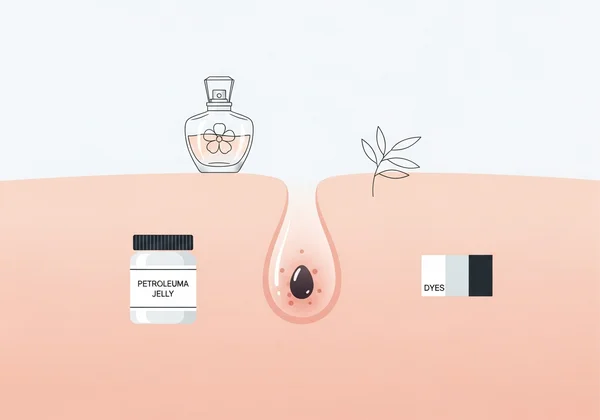
The Occlusives Trap: Lanolin, Petrolatum, and Mineral Oil
Occlusives work by creating a physical barrier on the skin to lock in moisture. While this is great for preventing chapped lips, some of the heaviest occlusives can be a disaster for the skin around them. Ingredients like lanolin, petrolatum, and mineral oil are thick and can form a seal over your pores.
This seal traps sweat, dead skin cells, and bacteria underneath. For your acne-prone skin, this is a perfect recipe for inflammation and breakouts. While these ingredients might not bother everyone, they are a major red flag if you struggle with pimples around your lip line.
Fragrance Fix: How Artificial Scents Irritate Sensitive Lip Skin
Who doesn't love a cherry or vanilla-scented lip balm? Unfortunately, the "fragrance" or "parfum" listed on an ingredient label can hide dozens of chemical compounds. These synthetic scents are a leading cause of skin irritation and allergic reactions.
When your skin becomes irritated, its natural defense system can go into overdrive. This can lead to inflammation, which in turn can trigger or worsen acne. If you have sensitive or acne-prone skin, choosing fragrance-free products is one of the safest bets you can make.
Color Culprits: Dyes and Pigments That Clog Pores Around the Mouth
Tinted lip balms and glosses owe their beautiful colors to various dyes and pigments. However, certain types, especially red dyes derived from coal tar (often listed as D&C Red), are known to be highly comedogenic.
These tiny color particles can easily settle into the pores surrounding your lips, especially if the product "bleeds" or migrates outside the lip line. Over time, this accumulation can lead to clogged pores and the persistent, tiny bumps characteristic of perioral acne.
Why Lip Balm Ingredients Cause Perioral Breakouts
To get clear skin, understanding which ingredients cause problems is your first step. The next is understanding how they cause acne specifically around your mouth. The skin in this area is unique, and several factors make it particularly susceptible to breakouts from your lip products.
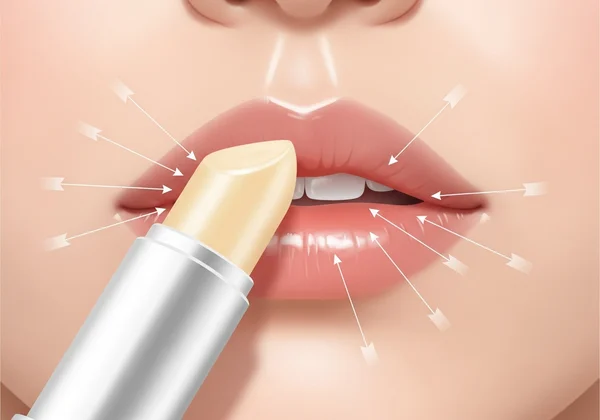
The Migration Effect: How Ingredients Travel Beyond the Lip Line
Lip balm rarely stays perfectly on your lips. Throughout the day, as you talk, eat, and drink, the product naturally spreads or "migrates" onto the surrounding skin. This is especially true for oilier or glossier formulas.
This migration means that comedogenic oils, waxes, and pigments don't just sit on your lips—they end up on the delicate skin of your upper lip and around the corners of your mouth. Even a tiny amount of a pore-clogging ingredient, applied repeatedly, can be enough to trigger a breakout.
Lip Skin vs. Facial Skin: Why This Area is Particularly Vulnerable
The skin on your lips differs significantly from facial skin. It's much thinner and lacks oil glands. Meanwhile, the skin around your lips contains many sebaceous glands that produce oil.
When a heavy, occlusive lip balm migrates onto this oil-producing skin, it creates a blockage. The oil that would normally exit the pore gets trapped, creating a perfect environment for acne bacteria to thrive. This physiological difference is why an ingredient can be fine for your lips but a disaster for the surrounding skin.
The Vicious Cycle: Lip-Licking and Ingredient Irritation
Many of us have a subconscious habit of licking our lips, especially when they feel dry or we're wearing a flavored balm. Saliva contains digestive enzymes that can break down your skin's protective barrier, leading to dryness and irritation.
This creates a vicious cycle: your lips feel dry, so you apply more balm. The flavor might tempt you to lick them, causing more dryness and irritation. This leads to even more balm application. All the while, you are constantly reapplying and spreading potentially pore-clogging and irritating ingredients around your mouth.
Real Stories: How Users Identified Their Lip Balm Acne Trigger
Theory is helpful, but real-world experiences show just how impactful a simple product change can be. These anonymous stories highlight how different people, just like you, discovered their lip balm was the source of their skin woes.
Case Study 1: The Teen's Transformation After Ditching Flavored Lip Balms
"Sam," a 17-year-old, struggled with persistent pimples on his upper lip for years. He tried countless acne treatments with no success. Frustrated, he decided to analyze everything that touched his face. Using an online tool, he checked the ingredients of his favorite strawberry-flavored lip balm. The results flagged both the "fragrance" and a specific red dye as potential irritants. He switched to a simple, fragrance-free, and untinted balm. Within three weeks, the acne that had plagued him for years completely cleared up.
Case Study 2: The Professional's Breakthrough After Switching to Tinted Lip Products
"Irene," a 32-year-old marketing manager, loved the convenience of tinted lip balms for a quick, polished look. However, she noticed tiny, recurring bumps around the corners of her mouth. She assumed it was stress-related. On a whim, she decided to check her products. Her go-to tinted balm contained several comedogenic oils and a D&C red dye. She swapped it for a non-comedogenic lipstick, applying it carefully to stay on her lips. The bumps disappeared and never returned.
Case Study 3: The Athlete's Solution to Sweat-Induced Lip Balm Breakouts
"Chris," a 25-year-old runner, always applied a thick, waxy SPF lip balm before his long runs. He developed stubborn acne along his chin and upper lip. He thought it was just "sweat acne." After analyzing his SPF lip balm, he discovered it was loaded with heavy occlusives like petrolatum and lanolin. When he sweat, these ingredients would mix with sweat and oil, creating a pore-clogging mess. He switched to a lightweight, mineral-based SPF lip screen, and his exercise-related breakouts vanished.
How to Check Your Lip Balm for Pore-Clogging Ingredients
Are you ready to investigate your own lip products? You don't need to be a chemist or memorize a long list of ingredients. Our free and easy-to-use tool does the hard work for you.
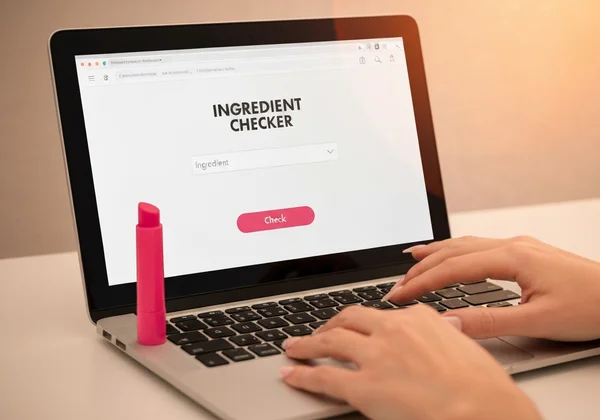
Step-by-Step Guide to Analyzing Your Lip Product Ingredients
Taking control of your skincare routine is just three simple steps away. Here’s how to get an instant analysis of any product:
- Copy the Ingredients: Find the full ingredient list on your lip balm's packaging or the product's webpage. Copy the entire list.
- Paste into the Checker: Go to the PoreCloggingChecker.org homepage and paste the ingredient list into the input box.
- Get Your Results: Click the "Check" button. The tool will instantly analyze the list and highlight any ingredients known to be comedogenic.
Understanding Your Lip Balm Analysis Results
Your results will be clear and easy to understand. Any ingredient from our comprehensive database that has a potential to clog pores will be flagged, usually in a distinct color like red. This gives you a quick visual guide to the potential troublemakers in your product. The tool provides an objective analysis based on scientific data, free from brand bias.
What to Look For: Red Flags in Lip Balm Ingredient Lists
While using our tool is the easiest method, it's also empowering to recognize red flags on your own. When scanning an ingredient list, be cautious if you see the following near the top:
- Lanolin and its derivatives (e.g., Acetylated Lanolin Alcohol)
- Coconut Oil (Cocos Nucifera Oil)
- Cocoa Butter (Theobroma Cacao Seed Butter)
- Isopropyl Myristate
- Certain Red Dyes (e.g., D&C Red #27)
Seeing one of these doesn't guarantee a breakout, as formulation matters. However, if you are acne-prone, their presence is a good reason to be cautious and perform a quick check with our ingredient analyzer.
Taking Control: Your Path to Lip Balm Acne-Free Skin
Your journey to clearer skin around your mouth begins with knowledge. We've seen that common ingredients like heavy occlusives, fragrances, and certain dyes in lip balms are frequent causes of perioral acne. The constant migration of these products onto the surrounding skin can trap oil and bacteria, leading to frustrating and persistent breakouts.
Here's what you need to remember:
- Be skeptical of all lip products, even those you see labeled "natural" or "for sensitive skin."
- Understand that ingredients behave differently on your lips versus the skin around them.
- Regularly checking ingredient lists is the most powerful habit you can build to prevent pore-clogging issues.
Don't stay in the dark about what's in your skincare. Stop guessing and start knowing. Take a moment right now to grab your most-used lip balm, find its ingredients, and give it a quick scan.
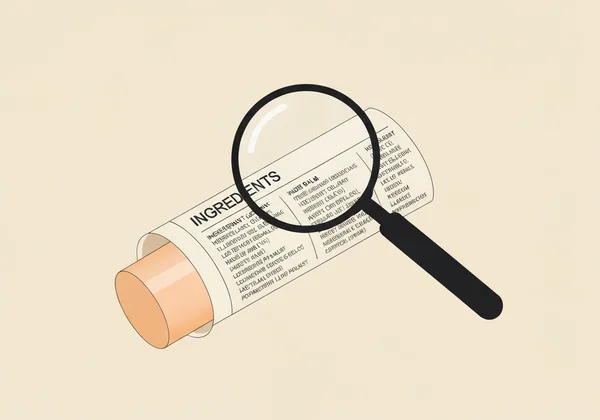
Ready to unveil the hidden culprits in your routine? Try our free tool now and get the clear answers you deserve.
FAQ Section
Are all flavored lip balms bad for acne-prone skin?
Not necessarily, but many are. The problem lies with artificial "fragrance" or "parfum," which can cause irritation that leads to acne. If a balm is flavored with a non-irritating natural extract and is free of other comedogenic ingredients, it may be fine. The safest approach for your skin is to choose fragrance-free options.
Can natural ingredients in lip balms still cause pore-clogging?
Absolutely. "Natural" does not mean "non-comedogenic." For example, coconut oil is a completely natural ingredient, but it is highly comedogenic and a major trigger for many people. It's crucial for you to evaluate every ingredient, regardless of whether it's natural or synthetic. You can easily check your product to see if its natural oils are a risk.
How long does it take for lip balm acne to clear up after switching products?
It varies for each person, but you might see a noticeable improvement within 2-4 weeks. This gives your skin enough time to go through a full cycle and for the inflammation to calm down. Consistency is key, so stick with your new, non-comedogenic product.
What's the safest type of lip balm for someone with perioral dermatitis?
For perioral dermatitis, which involves inflammation around the mouth, it's vital to use the blandest products possible. You should look for a lip balm that is free of fragrance, flavor, lanolin, and heavy waxes. A simple formula with ingredients like squalane or glycerin can be a good starting point, but always consult your dermatologist for this condition.
How often should I check my lip balm ingredients with a pore clogging checker?
You should check any new product before you start using it. It's also a great idea to periodically re-check your existing favorites. Sometimes brands reformulate their products without a major announcement, and an ingredient list might change. A quick analysis with a pore clogging checker takes seconds and can save you weeks of breakouts.